Track this checklist in your personal plan.
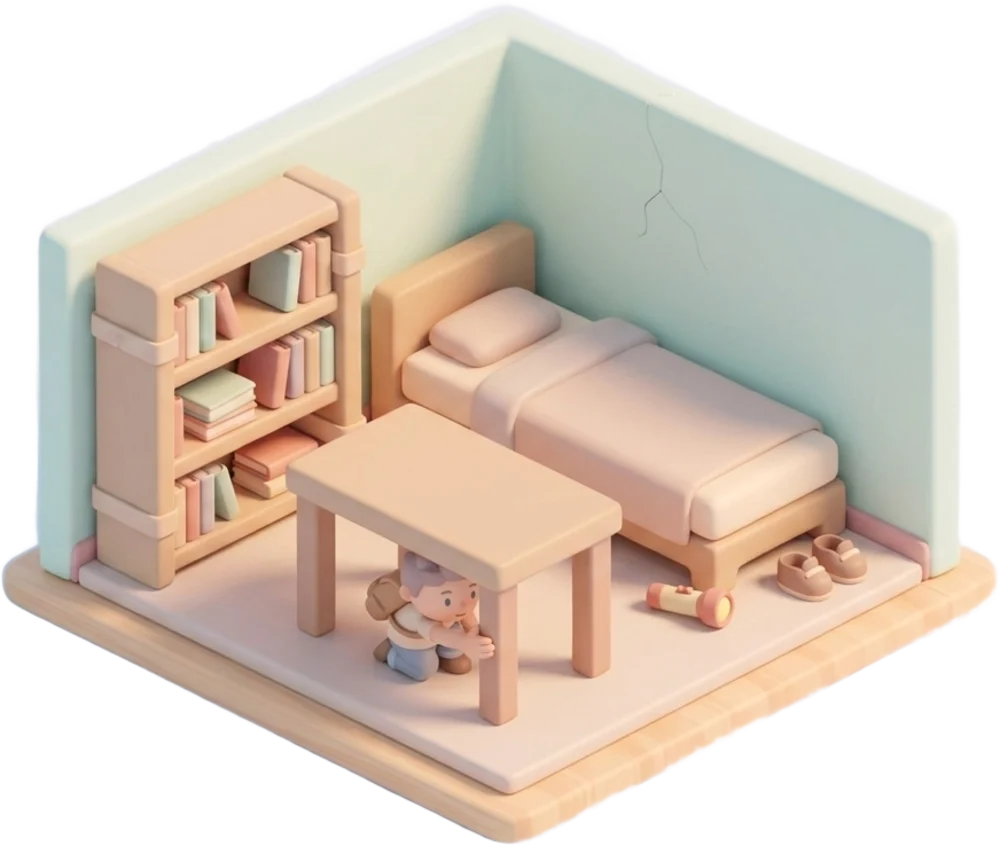
Earthquake
Drop, Cover and Hold On — then exit carefully when shaking stops; expect aftershocks.
Official maps and warning channels for Germany
Whether your street is affected is answered only by the official maps for your area.
Seismic hazard varies a lot from place to place. Check the earthquake-zone map for your location and secure heavy furniture.
Official maps
Open NINA (Germany)Earthquakes are less common in northern Europe than in the Mediterranean and the Balkans, but they can strike with little or no warning. Most injuries come from falling objects and partial collapses, not from the ground opening up. The proven immediate action is Drop, Cover and Hold On: get down, take cover under a sturdy table or against an interior wall, and hold on until the shaking stops. After the shaking, leave damaged buildings carefully, watch for aftershocks, and call 112 for trapped or injured people. Do not use lifts. This guidance follows mainstream civil-protection advice (including European seismic regions' public messaging).
When it is happening
Only if this scenario is imminent or already underway — not everyday preparation. For prep ahead of time, see How to prepare and the checklist below.
During the shaking — Drop, Cover, Hold On
- 1DROP to your hands and knees so the quake does not knock you down.
- 2COVER your head and neck under a sturdy table or desk; if none, cover with your arms next to an interior wall.
- 3HOLD ON to your shelter and move with it until the shaking stops.
- 4Stay away from windows, glass, heavy shelves and exterior walls.
- 5If in bed: stay there, protect head and neck with a pillow, unless under a heavy light fixture — then move beside the bed.
- 6If outdoors: move to a clear area away from buildings, streetlights and power lines; drop and cover your head.
- 7If in a vehicle: pull over clear of bridges and power lines, stay inside with seatbelt on until shaking stops.
When the shaking stops
- 1Check yourself and others for injuries; give first aid if trained; call 112 for serious injuries or people trapped.
- 2Expect aftershocks — Drop, Cover, Hold On again if shaking returns.
- 3Leave the building if it is damaged or you smell gas; use stairs, never lifts.
- 4If you smell gas: do not switch lights or use phones inside; open a window if safe, leave, and report from outside.
- 5Wear shoes — debris and glass are common.
- 6Listen to official warnings for tsunami risk if you are on a coast in a seismic region.
Important safety warnings
- Do not run outside during strong shaking — falling façades and glass are a major hazard.
- Do not stand in doorways as a primary strategy in modern buildings; a table or interior cover is better.
- Do not use lifts after an earthquake.
- Do not re-enter damaged buildings until authorities or engineers say it is safe.
How to prepare
Secure your home
- 1Secure tall furniture, TVs and shelves to walls; store heavy items low.
- 2Know how to shut off gas, electricity and water if you can do so safely after a quake.
- 3Keep a torch, shoes and a phone near the bed.
- 4Agree a family meeting point outdoors away from buildings.
Go-bag and supplies
- 1Water, food, medicines, radio, torch, power bank, copies of documents for 72 hours.
- 2Whistle to signal rescuers if trapped.
- 3Know your building's safe spots and exits.
Good to know
- 112 is free in Germany and across the EU, works without credit and over any available network. Without a SIM card an emergency call is not possible in Germany – the card must be in the phone.
- Drop–Cover–Hold is the international public message used across seismic Europe.
- Aftershocks can continue for hours or days — keep shoes and a torch handy.
Preparedness checklist
The concrete steps for this scenario. Add them to a plan to track your progress.
Actions
- Secure tall furniture and shelvesEssential
Toppling furniture and falling objects cause a large share of earthquake injuries. Anchor wardrobes, bookcases and shelves to the wall with metal angle brackets or anti-tip straps, keep heavy objects on low shelves, and hang nothing heavy above beds or sofas. Re-check anchors whenever you rearrange a room.
- Outdoor family meeting point
Phone networks are often congested after a quake, so agree in advance where your household reunites. Pick an open spot clear of façades, glass and power lines — a park or square a few minutes away — plus a backup farther out, and name an out-of-area contact everyone can text. Walk the route with children once.
Supplies
- Torch, shoes and phone by the bedEssential
Night-time quakes can leave floors covered in broken glass in the dark. Keep sturdy-soled shoes, a small LED torch or headlamp and your charged phone within arm's reach of the bed — a headlamp keeps both hands free. Store spare batteries next to the light, not inside it, and check them twice a year.
- 72 h grab bag readyEssential
If your building is damaged you may need to leave fast and stay out for days — the EU baseline is 72 hours of self-sufficiency. Pack bottled water, no-cook food, personal medicines, document copies, a torch, a small battery radio, small banknotes and a topped-up USB-C power bank. Keep it near the exit and review it twice a year.
- Whistle in go-bag
If you are ever trapped in debris, shouting quickly exhausts you and fills your lungs with dust — short whistle blasts carry farther for far less effort. Clip a pea-less plastic whistle of around 100 dB to the outside of your go-bag, and consider a second one at the bedside. It costs little and never needs batteries.
- Work gloves in grab bag
After a quake, streets and homes are full of broken glass and sharp rubble. Gloves (plus the sturdy shoes by your bed) let you move safely and dig for belongings without cutting your hands. Official earthquake kits list them alongside the torch and whistle.
Skills
- Practise Drop, Cover and Hold OnEssential
Strong shaking gives you seconds, so a rehearsed reflex beats improvising. Drop to hands and knees, take cover under a sturdy table and hold a leg so you move with it; with no table, crouch against an interior wall and cover head and neck with your arms. Walk the whole household through it once or twice a year.
Know & check
- Know gas / power / water shut-offsEssential
Shaking can crack gas lines, wiring and pipes, so knowing your shut-offs prevents fires and water damage afterwards. Locate and label the main gas valve, breaker panel and water main now, and keep any needed wrench by the valve. Turn gas off only if you smell it or hear hissing, and let the utility turn it back on.
- Know stairs and exits (no lifts)
After a quake lifts can jam or lose power, trapping you during aftershocks — stairs are the only safe way down. Walk every staircase and alternate exit in your building now, counting floors and doors so you could find the way in darkness or dust. Make the same quick check a habit in hotels and at work.
How to pack the grab bag
A starting-point schematic: bulky items at the bottom, heavy items mid-height close to your back, grab-first items on top, valuables on your body. Every bag is different — adapt the layout to your backpack and household.
Top of the main compartment
Quick to grab — what you need first
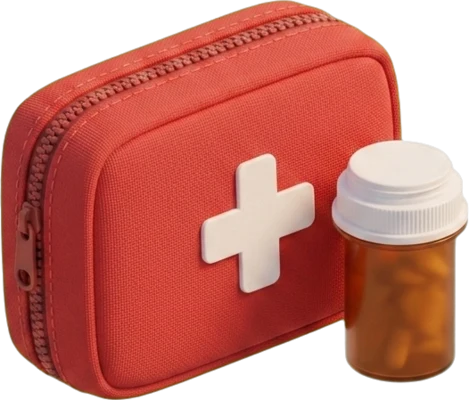 First aid & medication
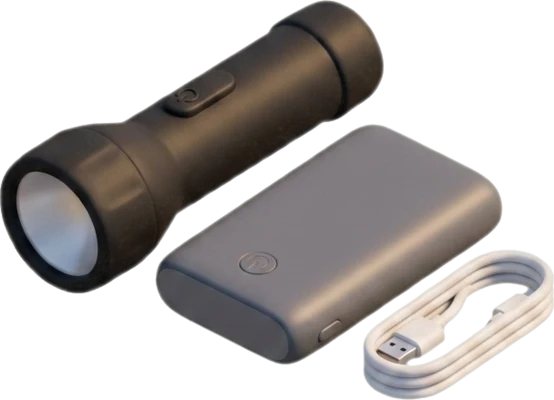 Torch & power bank
Middle, close to your back
Carry weight close to your body — easier on your back and balance
 Water
Water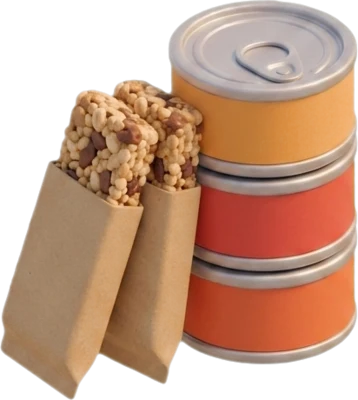 Food & snacks
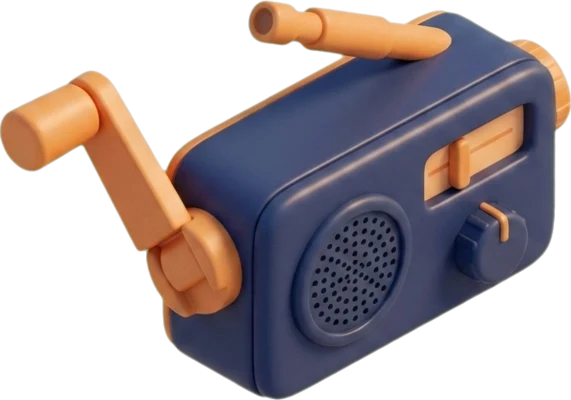 Crank radio
Bottom of the main compartment
Bulky, rarely used items pad the base
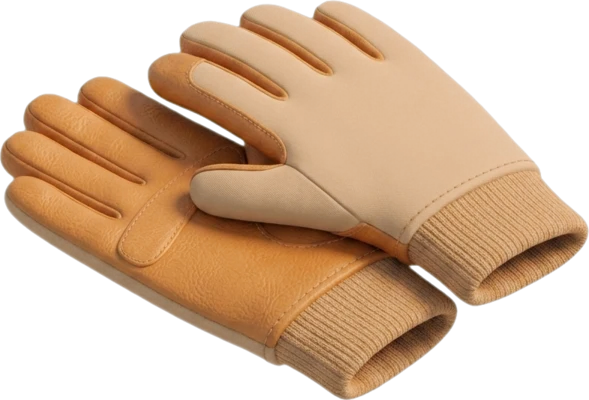 Work gloves
Outer pocket or on your body
Protected and always with you — even when you set the bag down
 Document copies
 Cash
Cash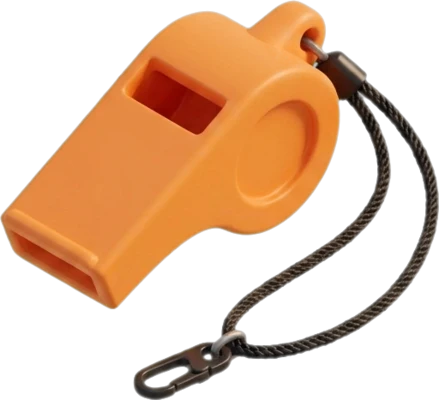 Whistle
Illustrative example, not a complete packing list — the checklist above is the reference. Pack one bag per person and check the contents about twice a year.
Official sources
- Drop, Cover, Hold On · Earthquake Country Alliance / civil protection
- BBK — earthquakes · BBK (Germany)
- EU Civil Protection · European Commission
Official sources in Germany
Content last reviewed: September 4, 2026