Track this checklist in your personal plan.
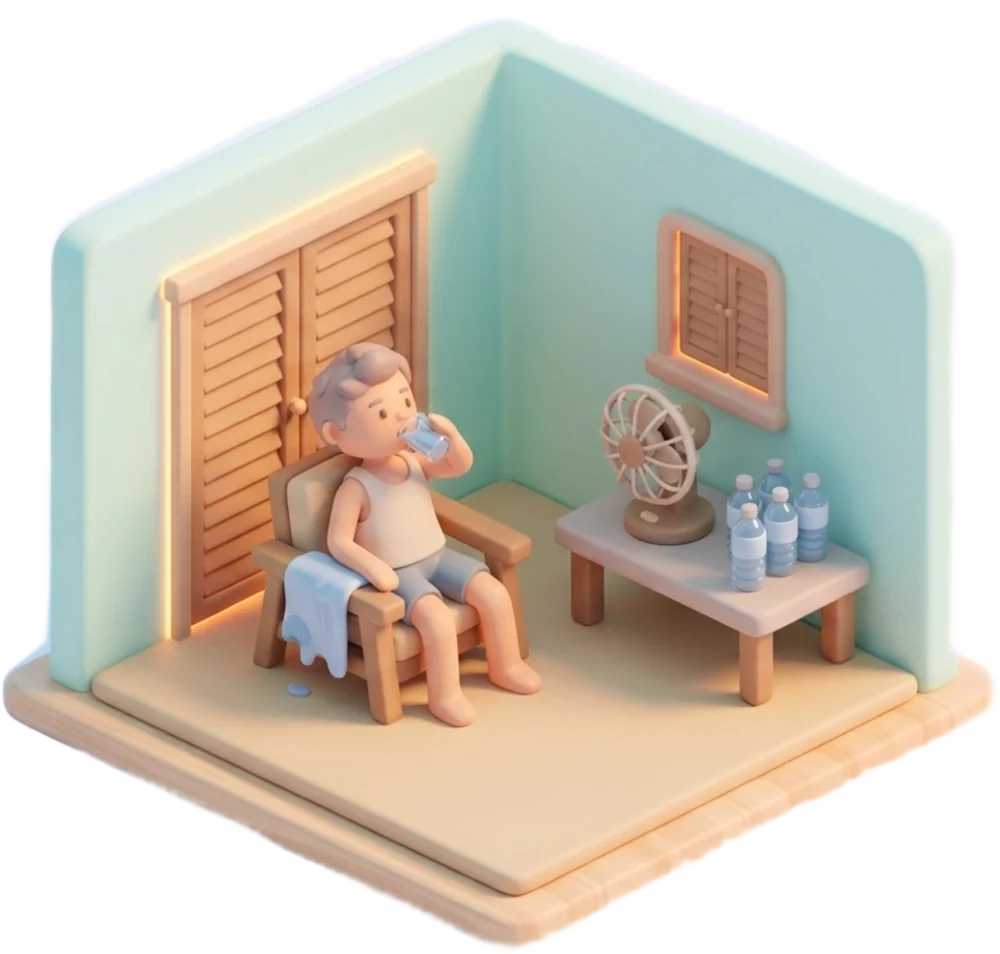
Heatwave
Cool down, drink water if fully awake, check on neighbours — heat kills quietly in Europe every summer.
Official maps and warning channels for Germany
Whether your street is affected is answered only by the official maps for your area.
Urban heat islands matter. Know cool rooms, public cooling spaces, and heat warnings for your city.
Official maps
Open NINA (Germany)Heatwaves are among the deadliest natural hazards in Europe. High temperatures, especially with humid nights and no cooling at home, strain the heart and can cause heat exhaustion or heatstroke. Older people, infants, pregnant people, outdoor workers and those with chronic illness are at highest risk. Simple actions save lives: stay out of the heat in the middle of the day, drink regularly (if you are fully awake and not fluid-restricted by a doctor), cool the body, and check on people who live alone. Call 112 for confusion, fainting, hot dry skin, or someone who stops sweating and becomes unresponsive.
When it is happening
Only if this scenario is imminent or already underway — not everyday preparation. For prep ahead of time, see How to prepare and the checklist below.
Protect yourself during extreme heat
- 1Stay indoors in the coolest room during the hottest hours (often early afternoon).
- 2Close curtains and shutters on sun-facing windows by day; ventilate only when outdoor air is cooler (often at night).
- 3Wear light, loose clothing; rest often if you must be outside; work in shade and early morning if possible.
- 4Drink water regularly; avoid excess alcohol; eat light meals.
- 5Cool the body: lukewarm showers, damp cloths on neck and wrists, fans only if air is not extremely hot.
- 6Never leave children or pets in a parked car — temperatures rise fatally within minutes.
Help someone with heat illness
- 1Move them to a cool place and loosen tight clothing.
- 2Cool the skin with water and fanning; ice packs on neck, armpits and groin if available.
- 3Give water to drink only if they are fully awake and can swallow safely.
- 4Call 112 if they are confused, seizing, unconscious, or do not improve — this may be heatstroke, a medical emergency. If it is not life-threatening but you need medical advice, the out-of-hours medical service on 116117 helps.
- 5Painkillers do not bring down a heat-induced body temperature – cool the person and call 112 instead of giving tablets.
Check on others
- 1Phone or visit elderly neighbours and people who live alone at least once a day in a heatwave.
- 2Watch outdoor workers, delivery staff and people sleeping rough for signs of heat stress.
- 3Know the nearest cool public space (library, shopping centre, cooling centre) if your home stays hot.
Important safety warnings
- Do not give fluids to someone who is drowsy, confused or unconscious — risk of aspiration; call 112.
- Fans alone in rooms above about 35 °C may not cool the body enough — combine with wetting the skin and seeking cooler spaces.
- Alcohol and heavy meals worsen dehydration in heat.
- Dark cars and closed rooms heat faster than outdoor air — minutes matter for children and pets.
How to prepare
Prepare before summer peaks
- 1Install or check fans, shading and, if you have it, air conditioning maintenance.
- 2Stock extra water; know pharmacy and doctor contacts for chronic medicines that interact with heat.
- 3Plan cooler sleeping arrangements (ground floor, cross-breeze) for hot nights.
- 4Follow the DWD heat warnings via the WarnWetter and NINA apps.
Medicines and health
- 1Ask your doctor or pharmacist if your medicines increase heat sensitivity.
- 2Keep insulin and other heat-sensitive medicines as instructed (cool bag if needed).
- 3Limit intense exercise in peak heat; reschedule outdoor sport.
Good to know
- 112 is free in Germany and across the EU, works without credit and over any available network. Without a SIM card an emergency call is not possible in Germany – the card must be in the phone.
- WHO Europe attributes tens of thousands of excess deaths to heat in hot summers — prevention is public health, not comfort only.
- The DWD warns at two levels: "strong heat stress" (perceived temperature around 32 °C) and "extreme heat stress" (around 38 °C) – the warnings arrive via the WarnWetter and NINA apps. Take both levels seriously.
Preparedness checklist
The concrete steps for this scenario. Add them to a plan to track your progress.
Actions
- Plan daytime shading and night ventilationEssential
Heat enters mainly through glass, and shading outside the window blocks far more of it than curtains inside. Close windows and shutters or blinds during the day once outdoor air is warmer than indoors, then open everything wide at night and early morning to flush the heat out.
- Daily check-in plan for vulnerable neighboursEssential
Most heat deaths happen quietly at home, often among older people living alone who feel thirst late and underestimate the danger. Agree a fixed daily call or visit for the duration of a warning, ideally in the afternoon peak, and check they are drinking, keeping the flat shaded and still seem alert.
Supplies
- Extra drinking water stockedEssential
In hot weather your body needs noticeably more than the usual planning figure of about 2 litres per person per day, so add a heat margin of several extra litres each. Sealed bottled water keeps longest stored cool and dark; empty and refill self-filled food-grade containers roughly every six months.
Skills
- Know heatstroke signs and 112 criteria
Heat exhaustion, with heavy sweating, weakness and nausea, improves with rest in a cool spot, sips of water and wetted skin; heatstroke does not. Call 112 for confusion, fainting or hot dry skin, cool the person while you wait, and give fluids only if they are fully awake. If heat exhaustion does not improve but there is no danger to life, the out-of-hours medical service on 116117 can advise. A first-aid course makes this routine.
Know & check
- Follow official heat warningsEssential
The German weather service (DWD) issues heat warnings at two levels – "strong heat stress" from a perceived temperature of about 32 °C and "extreme heat stress" from about 38 °C – and the higher level often activates municipal heat action plans. Check the forecast each summer morning and enable push alerts; the warnings arrive via the DWD's WarnWetter app and the NINA warning app.
- Ask if medicines increase heat risk
Certain common medicines, including diuretics, blood-pressure drugs and some psychiatric medications, can impair sweating, fluid balance or temperature regulation. Review your list with your doctor or pharmacist before summer, never adjust a dose yourself, and ask which medicines need cool storage.
- Know nearest cool public space
A few hours in cool surroundings each day help your body recover, which matters most when your home has no air conditioning and stays warm at night. Scout options in advance, such as libraries, museums, shopping centres or churches, and check whether your city publishes a map of designated cool spaces.
- Never leave kids/pets in carsEssential
A parked car turns into an oven within minutes, even in the shade or with windows cracked, and children's bodies heat up far faster than adults'. Make no exception for a quick errand, and if you see a child or animal locked in a hot car, call 112 straight away.
Official sources
- WHO Europe — heat and health · WHO
- BBK / German heat preparedness · BBK (Germany)
- EU Civil Protection — preparedness · European Commission
- DWD heat warnings · Deutscher Wetterdienst (DWD)
Official sources in Germany
Content last reviewed: September 4, 2026