Track this checklist in your personal plan.
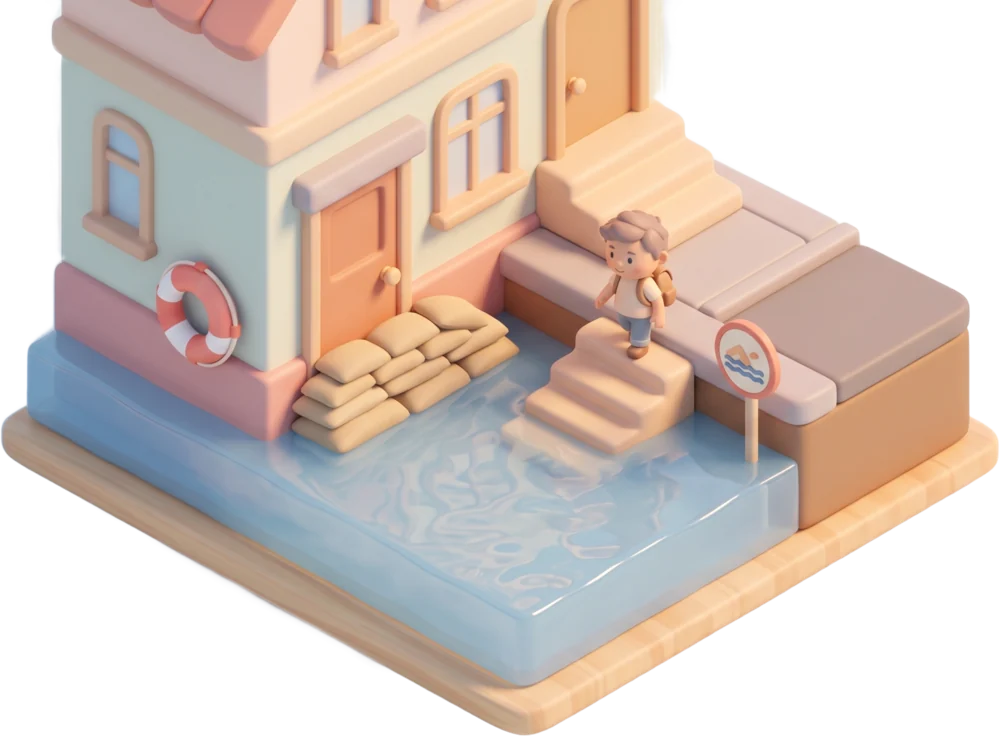
Flooding
Water can rise fast — move to higher ground early, stay out of flood water, and keep your documents and warning apps ready.
Official maps and warning channels for Germany
Whether your street is affected is answered only by the official maps for your area.
Country-level flood risk is only a starting point. Check your municipality flood hazard maps and river gauges for your street.
Official maps
Open NINA (Germany)Floods are the most common natural hazard in Europe. They happen when rivers overflow, when the sea is pushed inland by storms, or when heavy rain falls faster than the ground and drains can take it — this "flash" or heavy-rain flooding can hit within minutes, even far from any river. Flood water is dangerous because it moves fast, is often dirty, and hides holes, debris and live electricity. Just a small depth of moving water can knock you off your feet or sweep a car away. The good news: most flood harm to people is preventable. If you know your local risk, receive warnings early, and move up and away from the water instead of trying to pass through it, you greatly improve your safety. In any life-threatening situation, call 112, the EU-wide emergency number.
When it is happening
Only if this scenario is imminent or already underway — not everyday preparation. For prep ahead of time, see How to prepare and the checklist below.
When a flood warning is issued
- 1Take the warning seriously and act early — do not wait to see the water.
- 2Check official updates from your local authorities, radio, and warning apps.
- 3Move people, pets, valuables and important documents to a higher floor.
- 4Charge your phone and power bank while you still have electricity.
- 5Prepare to leave: fuel in the car, sturdy shoes, and a small grab bag ready.
- 6If authorities tell you to evacuate, do it at once and follow the routes they give.
When water is rising
- 1Move upstairs or to the highest safe level; leave basements and cellars.
- 2If it is safe and dry to reach the switch, turn off electricity, gas and water at the mains.
- 3Never enter a flooding basement — water and electricity together can kill.
- 4Take your grab bag, phone, medicines and warm clothing with you.
- 5Do not use lifts.
- 6Call 112 if you or others are in danger and cannot get to safety.
If you are outside or in a vehicle
- 1Never walk or drive through flood water — turn around, find another way.
- 2Move away from rivers, streams, ditches, storm drains and the coast.
- 3Head for higher ground on foot if roads are flooded.
- 4If your car stalls in rising water, leave it and get to high ground if you safely can.
- 5Stay clear of downed power lines and report them to the authorities.
After the water goes down
- 1Return home only when authorities say it is safe.
- 2Assume flood water is contaminated — avoid contact, and wash hands well.
- 3Do not turn electricity or gas back on until a professional has checked them.
- 4Do not use tap water for drinking until authorities confirm it is safe.
- 5Throw away food and medicines that touched flood water.
- 6Photograph the damage for your insurance, and ventilate to help drying.
Important safety warnings
- Never walk or drive through flood water — even 15 cm of moving water can knock you down, and 30 cm can float a car. Turn around, don't drown.
- Never enter a flooded basement or touch electrical switches while standing in water — electrocution is a real risk.
- Never run a generator, camping stove, grill or petrol-powered water pump indoors or in a garage — carbon monoxide is invisible and can kill.
- Stay away from downed or dangling power lines and report them to the authorities.
- Treat all flood water as contaminated with sewage, chemicals and debris — avoid contact and never drink tap water until it is declared safe.
- Do not go sightseeing near swollen rivers, bridges or the coast during a flood or storm.
How to prepare
Know your risk and warnings
- 1Find out if your home, workplace and children's school are in a flood-prone area — check the flood hazard maps of your Land and hochwasserzentralen.de.
- 2Install the official warning app NINA (from the BBK) and enable alerts.
- 3Turn on cell broadcast ("DE-Alert") on your phone so public warnings reach you automatically.
- 4Agree on a family meeting point on higher ground and how you will contact each other.
- 5Note evacuation routes away from rivers and low ground.
Protect your home
- 1Keep valuables, electronics and hazardous chemicals off the floor and out of the cellar.
- 2Consider flood barriers or sandbags, backflow valves for drains, and moving sockets higher up.
- 3Secure heating-oil tanks against floating and leaking – escaping oil often makes a house uninhabitable.
- 4Know where and how to switch off electricity, gas and water at the mains.
- 5Check whether your insurance covers flood and heavy-rain damage.
- 6Clear gutters and drains so water can flow away.
Prepare an emergency kit and documents
- 1Store copies of ID, insurance and property papers in a waterproof folder and as digital copies.
- 2Pack a grab bag: water, food, medicines, first-aid kit, torch, power bank and warm clothes.
- 3Keep a battery or hand-crank radio to hear warnings if the power fails.
- 4Have some cash in small notes in case card payments do not work.
- 5Prepare for pets: carrier, food and a lead.
Good to know
- Most flood deaths involve vehicles and people trying to cross moving water — staying out of the water is the single most effective thing you can do.
- Flash and heavy-rain floods can happen far from any river, including in cities, when drains overflow. You do not need to live by water to be at risk.
- Cell broadcast ("DE-Alert" in Germany) is the public warning system that sends an alert directly to mobile phones in a danger area — no app or signup needed.
- In Germany the free NINA app from the BBK delivers official warnings; cell broadcast (DE-Alert) complements it without any app.
- 112 is free in Germany and across the EU, works without credit and over any available network. Without a SIM card an emergency call is not possible in Germany – the card must be in the phone.
- Water often rises fastest at night — acting on the first warning, rather than waiting, buys you vital time.
Preparedness checklist
The concrete steps for this scenario. Add them to a plan to track your progress.
Actions
- Agree a family meeting point on higher groundEssential
Flood water often rises fastest at night, when your household may be scattered or asleep. Pick a meeting point on higher ground that everyone can reach on foot without crossing water, plus an out-of-area phone contact. Walk the route together, children included, and refresh the plan once a year.
- Keep valuables and chemicals up off the floor
Anything at floor level in a basement or ground floor is the first loss in a flood. Move electronics, keepsakes and important papers to upper shelves or floors as a habit, not only when a warning comes. Store paints, cleaners and other chemicals high too — mixed into flood water they contaminate your whole home.
Supplies
- Store documents waterproof and as digital copiesEssential
One soaked cellar can destroy birth certificates, contracts and insurance policies at once. Keep them in a single grab-ready folder in a waterproof container upstairs, never in the basement. Deposit duplicates outside your home and add digital copies — official German guidance advises encrypting scanned IDs.
- Pack a grab bag with water, food and medicinesEssential
If you must leave quickly, the bag has to be ready before the warning comes. Pack per person for about 72 hours: bottled water, no-cook food, personal medicines, document copies, a torch, a power bank and warm, waterproof clothing. Keep it near the exit, not in the basement, and check the contents twice a year.
- Keep a torch, power bank and battery radio
Power and networks often fail together in a flood, so plan light and news that need no mains. An LED head torch keeps your hands free; a 20,000 mAh USB-C power bank gives about three phone charges — top it up every 3–6 months. Add a battery or crank radio with FM and DAB+, and store spare batteries outside the devices.
- Get sandbags or flood barriers ready
Barriers buy time rather than stop a major flood: they can keep low water out of doorways, light wells and air bricks. Sandbags are cheap but need dry-stored sand and time to fill; reusable door barriers deploy faster, so measure your openings first. A backflow valve stops the most common cause of flooded basements.
- Get work gloves and rubber boots for the clean-up
Flood water leaves behind contaminated mud, splintered wood and broken glass. Sturdy work gloves and rubber boots protect against cuts and infection during the clean-up — official flood guidance recommends both, and any cut sustained in flood dirt should prompt a tetanus check.
- Keep some cash in small notes
Floods knock out power and networks, and with them ATMs and card terminals. The BBK recommends keeping cash in small notes; a common guide figure is roughly 70–100 euros per person — about 72 hours of essentials — plus some coins, since shops may have no change. Store it dry, in a fixed spot known only to your household.
Skills
- Learn where to shut off power, gas and waterEssential
Water and electricity are a lethal mix, so cutting power before flooding reaches sockets matters. Find your main breaker, gas valve and water stopcock now — your landlord or utility company can show you — and label them clearly. Practise reaching them in the dark, and never touch electrics while standing in water.
Know & check
- Check if your home is in a flood-risk areaEssential
The Länder publish flood hazard and risk maps under the EU Floods Directive — look up your address on your Land's flood hazard maps or on hochwasserzentralen.de, or ask your municipality. Check river, coastal and heavy-rain risk separately, since flash floods also hit homes far from any water. The expected depth tells you what to protect first.
- Install an official warning app (e.g. NINA)Essential
Official apps add what sirens and cell broadcast cannot: maps, detailed instructions and advice for places you choose. In Germany NINA and KATWARN carry the federal warnings. Allow notifications and location, add home and workplace, and never rely on a single warning channel.
- Enable cell broadcast (DE-Alert) on your phoneEssential
Germany warns phones directly via cell broadcast ("DE-Alert") — no app, no signup, and it gets through even on congested networks. Check it is on: at the bottom of iOS notification settings, or under wireless emergency alerts on Android. It only reaches phones that are switched on.
- Check your flood and heavy-rain insurance cover
Standard home policies in Germany cover storm damage but not flooding or heavy rain — that usually needs a separate natural-hazard add-on called Elementarschadenversicherung. Check buildings and contents cover, including the basement, and photograph valuables now so claims go smoothly.
How to pack the grab bag
A starting-point schematic: bulky items at the bottom, heavy items mid-height close to your back, grab-first items on top, valuables on your body. Every bag is different — adapt the layout to your backpack and household.
Top of the main compartment
Quick to grab — what you need first
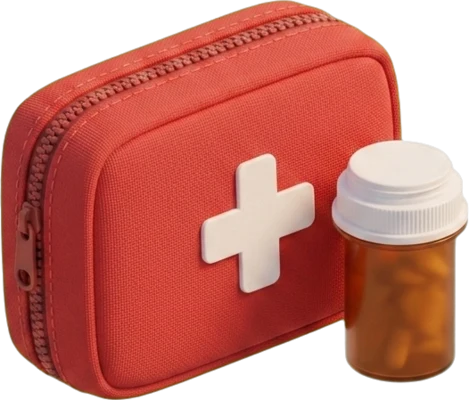 First aid & medication
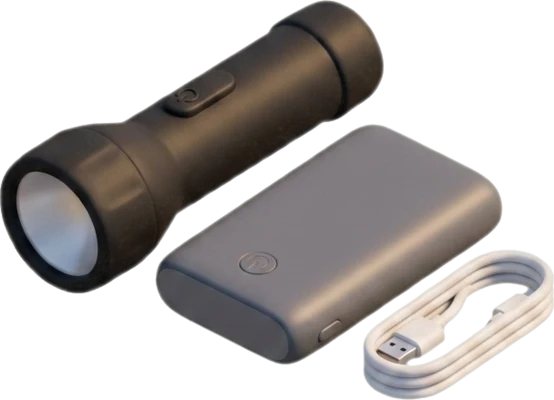 Torch & power bank
Middle, close to your back
Carry weight close to your body — easier on your back and balance
 Water
Water Food & snacks
 Crank radio
Bottom of the main compartment
Bulky, rarely used items pad the base
 Warm, waterproof clothing
 Work gloves
Outer pocket or on your body
Protected and always with you — even when you set the bag down
 Document copies
 Cash
Cash
Illustrative example, not a complete packing list — the checklist above is the reference. Pack one bag per person and check the contents about twice a year.
Official sources
- Federal Office of Civil Protection and Disaster Assistance (BBK) · BBK (Germany)
- Cross-state flood portal · Hochwasserzentralen der Länder
- EU Civil Protection & Humanitarian Aid · European Commission
- Floods — health guidance · World Health Organization (WHO)
- Flood preparedness and response · IFRC
Official sources in Germany
Content last reviewed: September 4, 2026