Track this checklist in your personal plan.
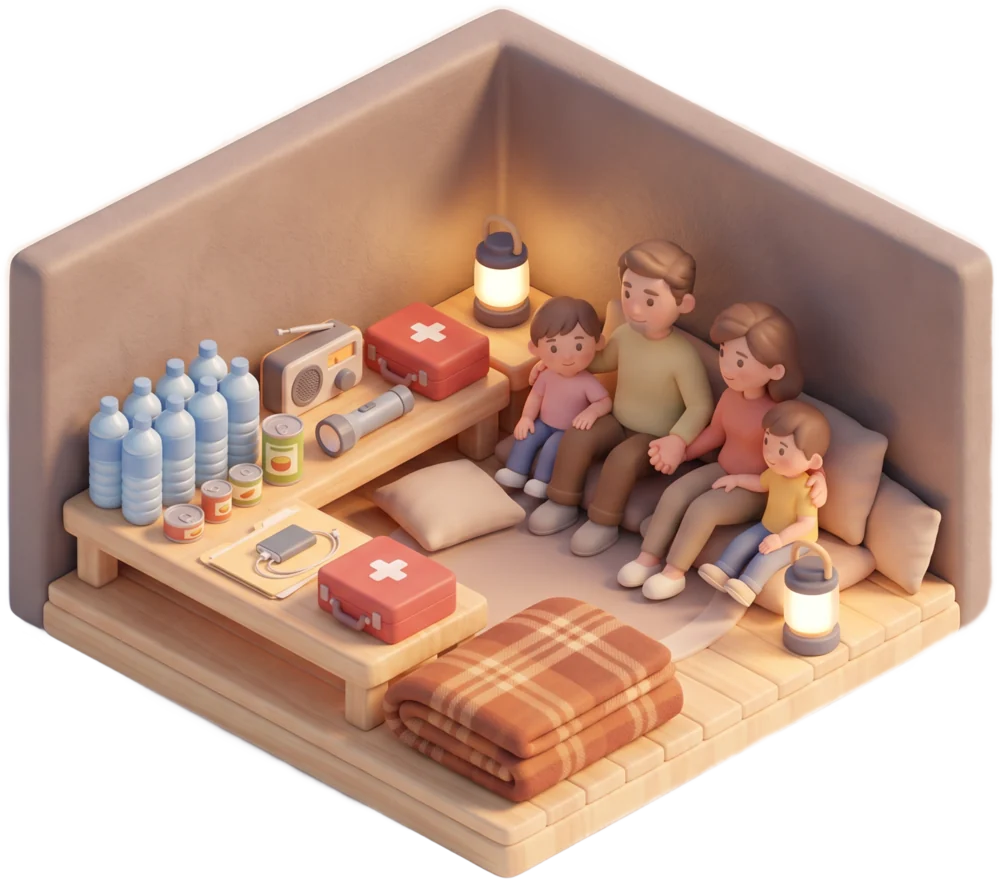
Armed conflict
Stay safe if armed conflict reaches your region: shelter smart, follow official alerts, and be ready to act.
Official maps and warning channels for Germany
Whether your street is affected is answered only by the official maps for your area.
There is no hazard map for this situation. Warning channels matter most: keep the warning app and cell broadcast active, know the siren signals, and decide which room in your home offers the most protection.
Open NINA (Germany)Armed conflict near where you live is frightening, but simple preparation and clear decisions save lives. The two things that protect people most are seeking sturdy shelter away from windows and following instructions from official authorities. The civil-protection authorities — in Germany the BBK, the Länder and the municipalities — plan for this and issue warnings through sirens, radio, TV and mobile phone alerts. You do not need to predict what will happen. You need a plan: know where to shelter, keep a small emergency stock and a ready-to-go bag, have copies of your documents, and agree in advance how to reach the people you care about. In any life-threatening situation, call 112, the EU-wide emergency number.
When it is happening
Only if this scenario is imminent or already underway — not everyday preparation. For prep ahead of time, see How to prepare and the checklist below.
If there is immediate danger (explosions, gunfire, air alert)
- 1Get inside a solid building at once and stay low.
- 2Move away from windows, glass and outside walls.
- 3Go to the strongest inner area: a cellar, an inner room, or a stairwell on a lower floor.
- 4If caught outdoors with no shelter, lie flat in a ditch or depression and cover your head.
- 5Call 112 only for a real emergency; keep the line short so networks stay free.
Get reliable information
- 1Turn on a battery or hand-crank radio and tune to the local public station.
- 2Read official alerts on your phone (cell broadcast "DE-Alert", warning apps like NINA).
- 3Follow only official sources; do not act on rumours or unverified social media.
- 4Note whether authorities tell you to shelter in place or to evacuate.
Shelter or evacuate — follow the official order
- 1If told to shelter: stay inside, keep the go-bag close, and wait for the all-clear.
- 2If told to evacuate: take your documents and go-bag, and leave calmly by the announced route.
- 3Switch off gas, unnecessary electricity and open flames before leaving if time allows.
- 4Help neighbours who are elderly, disabled or alone if you can do so safely.
- 5Tell a contact where you are going, then keep calls brief to save battery and network.
Important safety warnings
- In any life-threatening emergency call 112, the EU-wide emergency number, but keep calls short so lines stay open for others.
- Never stay near windows, glass or exterior walls during shelling or explosions — flying glass and debris cause many injuries.
- Do not touch or move any unexploded weapon, shell or unknown object; keep others away and report it to authorities.
- Do not spread or act on unverified rumours — follow only official warnings and instructions.
- Never run a generator, stove, grill or charcoal indoors — carbon monoxide is invisible and can kill.
- Do not ignore an official evacuation order or return home before the all-clear is given.
How to prepare
Build an emergency supply
- 1Store drinking water: aim for about 2 litres per person per day for several days.
- 2Keep non-perishable food that needs no cooking for at least 3 days, ideally up to ten days.
- 3Stock a first-aid kit, any regular medicines, and hygiene items.
- 4Add a battery or hand-crank radio, torches, power banks and spare batteries.
- 5Keep some cash in small notes; card systems may fail during power cuts.
Secure your documents
- 1Gather ID, passport, insurance, medical and family papers in one folder.
- 2Make paper copies and digital scans of the most important documents.
- 3Store copies safely, for example with a trusted person or in secure cloud storage.
- 4Keep the document folder near your go-bag so you can grab it fast.
Pack a go-bag
- 1Prepare a small backpack you can carry, ready by the door.
- 2Include water, snacks, medicines, a torch, a power bank and a warm layer.
- 3Add copies of documents, a little cash, and a spare set of keys.
- 4Pack items for children, older people or pets in your household.
Agree a family plan
- 1Choose two meeting points: one near home and one outside your neighbourhood.
- 2Write down key phone numbers on paper in case your phone dies.
- 3Agree an out-of-area contact everyone can check in with.
- 4Find out where local public shelters are and how local warnings sound.
- 5Practise the plan once with everyone in your household.
Good to know
- 112 is free in Germany and across the EU, works without credit and over any available network. Without a SIM card an emergency call is not possible in Germany – the card must be in the phone.
- Cell broadcast ("DE-Alert") can send warnings straight to phones in a danger area without any app or sign-up.
- Germany's BBK runs the NINA warning app; cell broadcast (DE-Alert) and local sirens add to it — learn what your local signals sound like. Not every place still has sirens.
- A battery or hand-crank radio keeps you informed when power and mobile networks are down.
- Keeping some cash and a few days of supplies helps everyone, because it reduces panic-buying and eases pressure on shops and services.
- Basic first-aid skills — stopping bleeding, CPR — can save a life before professional help arrives.
Preparedness checklist
The concrete steps for this scenario. Add them to a plan to track your progress.
Actions
- Agree two family meeting points and an out-of-area contactEssential
Family members may be at work or school when something happens, and networks can be overloaded. Pick one point near home and one outside your district, plus a contact in another region who relays messages — long-distance calls often connect when local ones fail. Rehearse the plan every few months.
- Write key phone numbers on paper
A dead or lost phone takes every stored contact with it. Note family numbers, your out-of-area contact, your doctor and 112 on paper, and put copies in your wallet, the go-bag and each child's jacket. Update the list whenever a number changes — a five-minute job worth repeating twice a year.
Supplies
- Store water (about 2 L per person per day)Essential
Water mains can fail when infrastructure is damaged, so cover at least 72 hours for your household — official German guidance suggests up to ten days. Store sealed bottled water cool and dark; carbonated keeps longest. Refill self-filled food-grade containers about every six months, and plan extra for hygiene and pets.
- Keep several days of no-cook foodEssential
Shops and power can be unavailable for days, so build a stock you can eat cold: canned vegetables and fish, crispbread, nuts, dried fruit, UHT milk. Aim for at least 72 hours — official German guidance suggests up to ten days. Store only what you normally eat, rotate it, and keep a manual can opener with the stock.
- Get a battery or hand-crank radioEssential
When power and mobile networks fail, broadcast radio is often your only source of official instructions such as shelter or evacuation orders. Choose a set with a dual FM and DAB+ tuner that runs on batteries plus crank or solar, and store spare batteries outside the device to prevent leakage damage.
- Pack a first-aid kit and medicinesEssential
Help can take longer to reach you in a conflict, so injuries may need treatment at home first. A kit stocked to the DIN 13157 benchmark covers dressings, bandages and gloves — check it yearly for expired sterile items. Add about ten days of regular prescription medicines, arranged ahead with your doctor or pharmacist.
- Prepare a ready-to-go grab bag (backpack) by the doorEssential
An evacuation order can come at short notice, and packing under stress wastes vital minutes. Fill one backpack per person with water, snacks, medicines, a torch, warm clothing, copies of your documents and some cash — enough for about 72 hours. Review the contents twice a year and after every use.
- Pack work gloves in your grab bag
Damaged buildings mean glass, twisted metal and rubble. Gloves let you clear a path, move debris or help others without disabling your hands — in a conflict, medical care for a cut hand may be days away. They take almost no space at the bottom of the bag.
- Add torches, power banks and spare batteries
Outages can accompany fighting, and dark stairwells or cellars are hazardous. LED headlamps keep your hands free; standardise on one battery size such as AA so every spare fits. A 20,000 mAh USB-C power bank recharges a typical phone about three times — top it up on a reminder every three to six months.
- Keep some cash in small notes
Card terminals and ATMs stop working when power or networks go down, and queues form fast in a crisis. The BBK recommends keeping cash in small notes and coins; a common guide figure is roughly 70-100 euros per person, enough for about 72 hours. Keep it dry and discreet in a fixed spot that only trusted household members know.
Skills
- Learn basic first aid (bleeding, CPR)
Severe bleeding and cardiac arrest are decided in the first minutes, often before responders can arrive in a conflict. Take a hands-on course with a recognised first-aid organisation and refresh it every two years. Firm pressure on a wound and hands-only CPR can keep someone alive until help reaches you.
Know & check
- Copy ID and key documents (paper + digital)Essential
If you must leave quickly or your home is damaged, proof of identity, ownership and insurance becomes essential for aid and claims. Keep everything in one grab-ready folder — originals or copies — and deposit duplicates with relatives or a bank. Store digital scans encrypted and password-protected.
- Locate local shelters and learn warning signalsEssential
Solid cover protects most during attacks: basements, underground garages and interior rooms away from windows. Pick the sturdiest cover you can reach quickly, even at night — Germany's shelters are being recorded by the municipalities by the end of 2026. In Germany a one-minute rising and falling siren tone means danger; learn your local signals. Not every place still has sirens.
- Install the NINA warning app and enable alertsEssential
Official warning apps deliver evacuation and shelter instructions straight to your phone; cell broadcast ("DE-Alert") gets through even on congested networks. In Germany that app is NINA. Check that emergency alerts are enabled in your phone settings, and never rely on a single channel.
- Keep a paper map with routes and meeting points marked
In a conflict, mobile networks and GPS can be congested, cut or jammed exactly when you need to move. Download offline maps in advance and keep a paper map in the grab bag with evacuation routes, both family meeting points and your out-of-area contact's address marked — it works with no network and no battery.
How to pack the grab bag
A starting-point schematic: bulky items at the bottom, heavy items mid-height close to your back, grab-first items on top, valuables on your body. Every bag is different — adapt the layout to your backpack and household.
Top of the main compartment
Quick to grab — what you need first
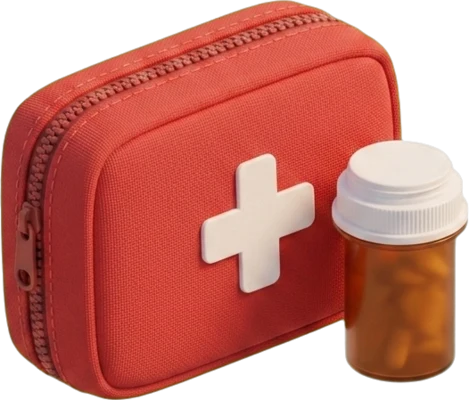 First aid & medication
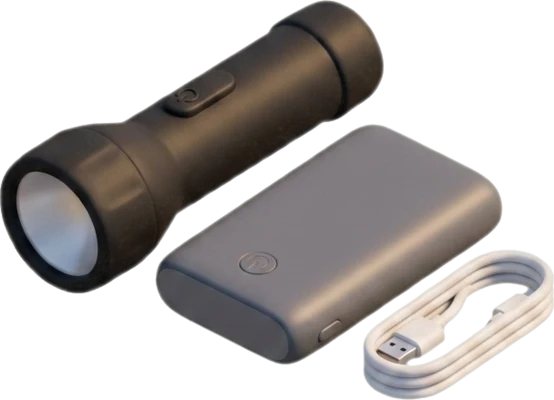 Torch & power bank
Middle, close to your back
Carry weight close to your body — easier on your back and balance
 Water
Water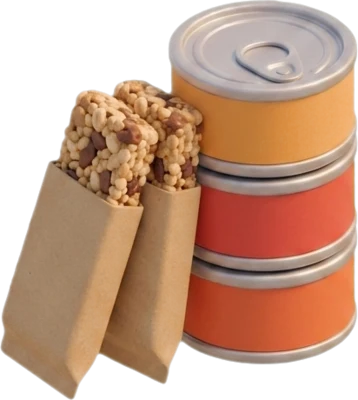 Food & snacks
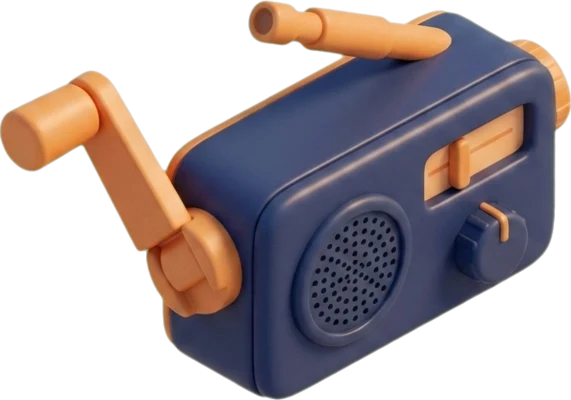 Crank radio
Bottom of the main compartment
Bulky, rarely used items pad the base
 Warm clothing
 Work gloves
Outer pocket or on your body
Protected and always with you — even when you set the bag down
 Document copies
 Cash
Cash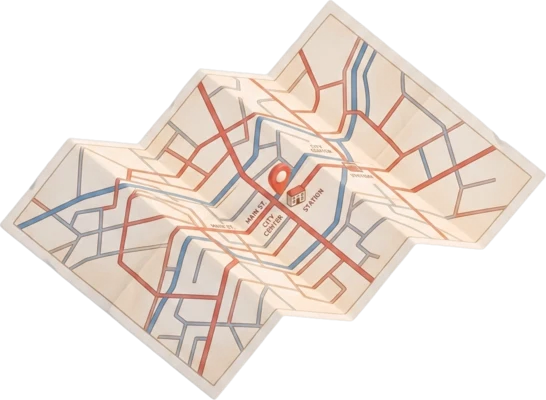 Paper map
Illustrative example, not a complete packing list — the checklist above is the reference. Pack one bag per person and check the contents about twice a year.
Official sources
- Federal Office of Civil Protection and Disaster Assistance (BBK) · BBK (Germany)
- European Civil Protection and Humanitarian Aid Operations · European Commission
- International Federation of Red Cross and Red Crescent Societies · IFRC
- World Health Organization · WHO
- 112 — the European emergency number · European Commission
Official sources in Germany
Content last reviewed: September 4, 2026